
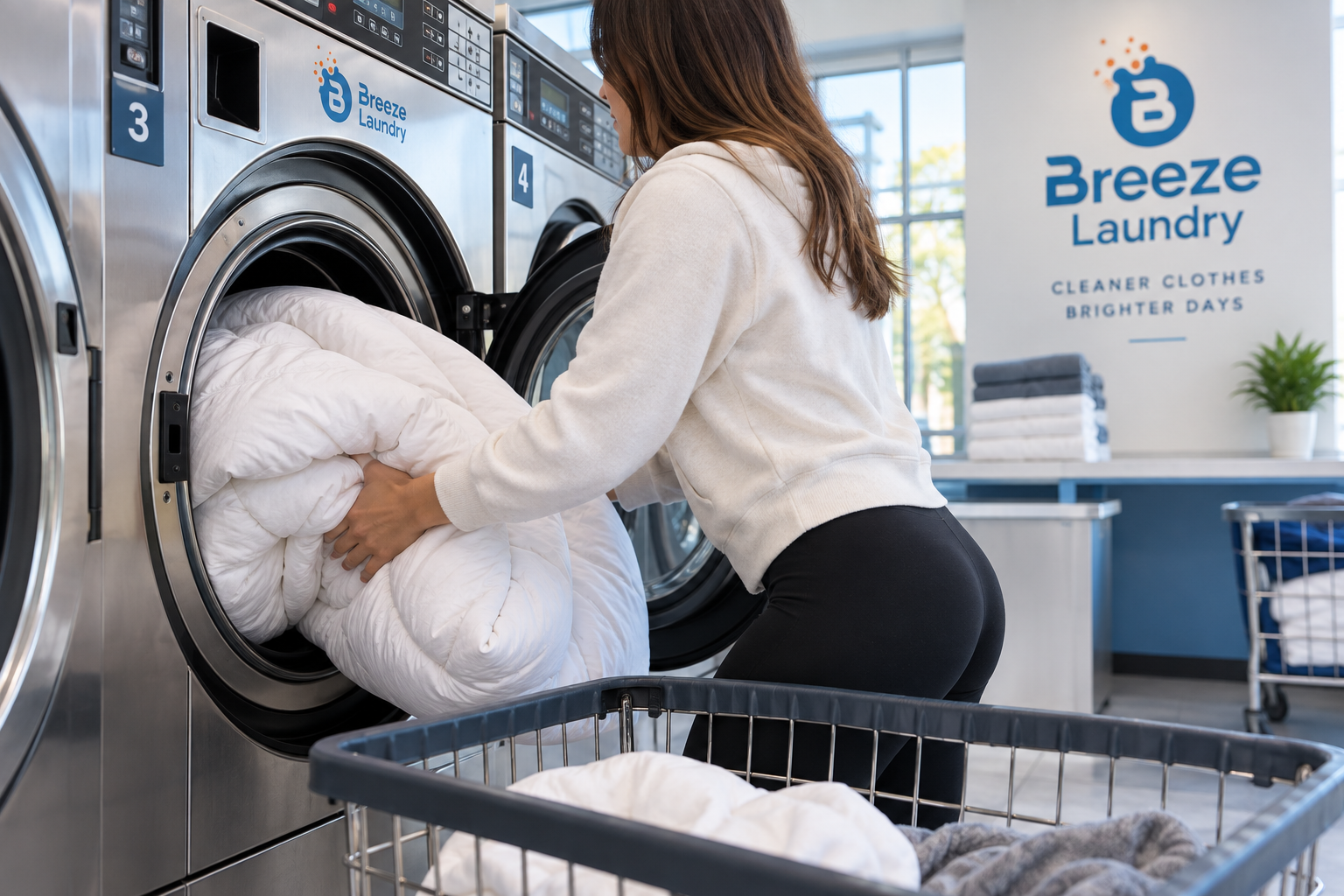
How to wash a comforter at a laundromat starts with two checks: does the care label allow machine washing, and can the comforter move freely inside the washer? If either answer is no, do not start a wash cycle.
A laundromat can make bulky bedding easier to handle when your home washer is too small. Still, machine size alone does not make every comforter washable. The filling, shell, stitching and drying instructions all matter.
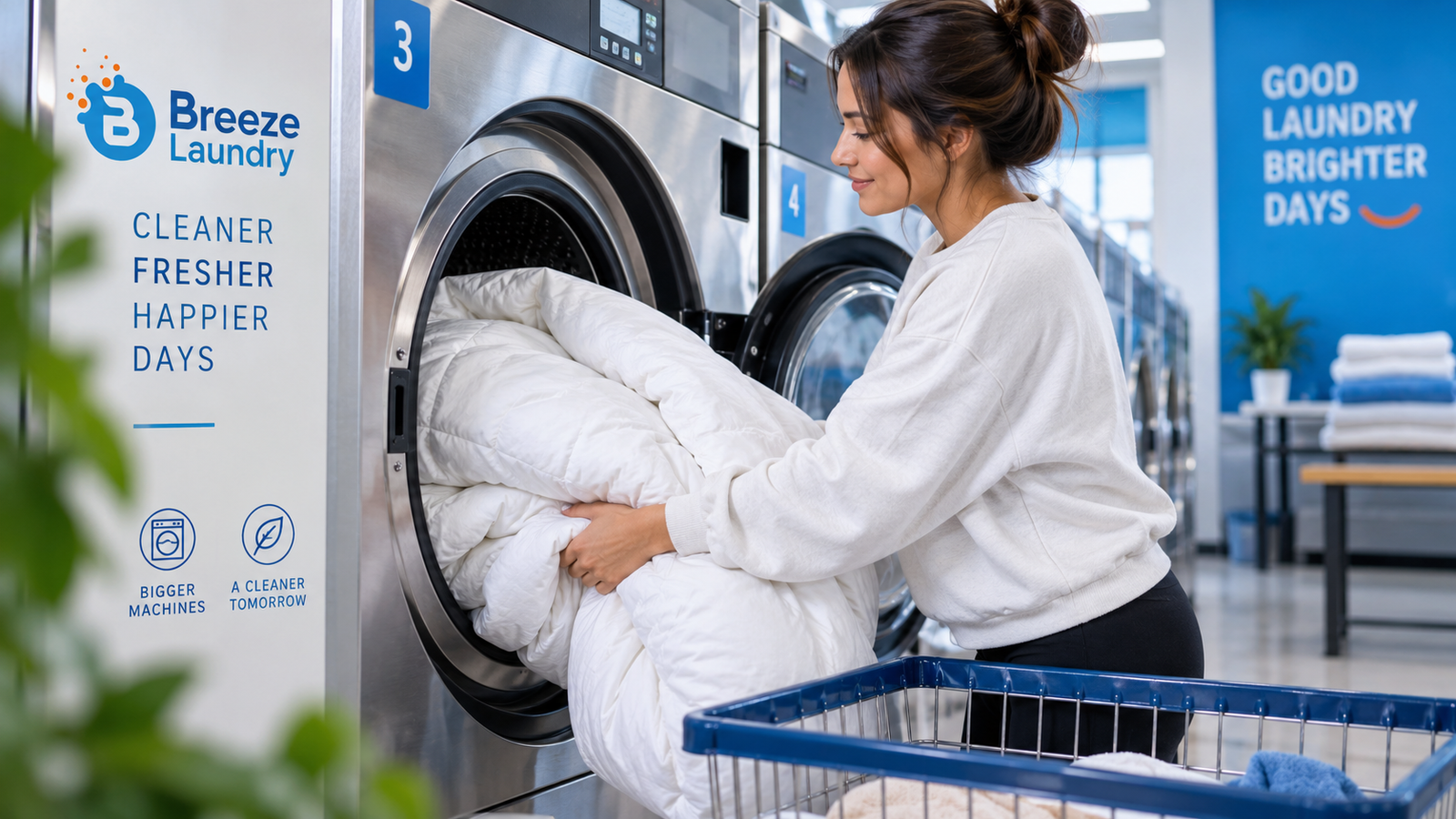
Quick answer: Can you Wash a Comforter at a Laundromat?
Yes, if its care label permits machine washing and you choose a washer and dryer with enough room for the comforter to move. Follow the specified cycle, water temperature and detergent directions. Then dry the filling fully before using or storing it. A Dry Clean Only label calls for a different care method, not a larger washer.
For the underlying capacity and drying advice, see Whirlpool’s comforter-care guide.
Before you Go: Three Checks that Prevent Avoidable Mistakes
1. Read the whole care label
Look for machine-washing permission, water temperature, cycle, bleach restrictions and drying symbols. Some comforters may permit washing but prohibit tumble drying. Others require professional care. Do not assume that all down, cotton, polyester or king-size comforters share one set of instructions.
If the tag is missing or illegible, ask the manufacturer or a qualified cleaner before trying an unfamiliar treatment. A larger machine cannot solve uncertainty about the fabric or filling.
2. Inspect seams and stains
Check for tears, loose stitching, exposed fill or damaged baffles. Repairs may be needed before a wash, because water and movement can worsen existing damage. Note any spills and use only a pretreatment appropriate for the item and its care instructions. Do not scrub delicate fabric aggressively.
3. Check both washer and dryer space
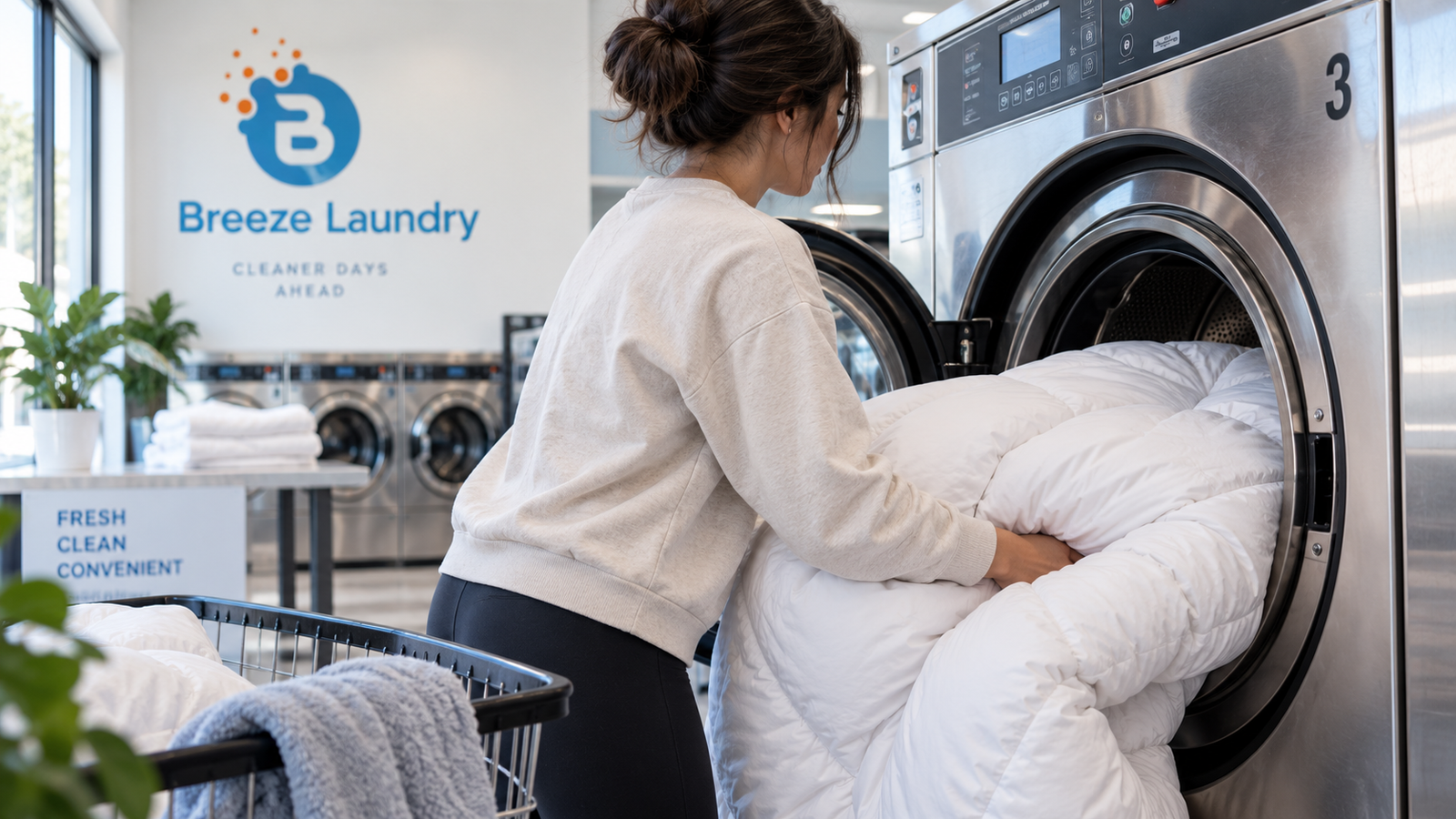
A comforter should sit loosely in the washer, not require force to shut the door. It must be able to move during the wash and rinse. The dryer also needs room for the bedding to tumble and unfold. If either machine is crowded, move up to a larger suitable machine or consider a different care option.
There is no reliable one-size-fits-all “king comforter = X-pound machine” rule: fill, thickness, wet weight and construction vary. Use the machine’s posted limits and ask the attendant if you are unsure.
| Need a machine with room for bulky bedding? Breeze Laundry says its laundromats have oversized washers and dryers for comforters and blankets. Check its Self-Service page, then pick the location that works for you.Explore Breeze Self-Service Laundry |
How to Wash a Comforter at a Laundromat: Step by Step
Step 1: Remove the duvet cover and sort the bedding
If your comforter uses a removable duvet cover, take the cover off. Follow the cover’s own label and wash it separately when its instructions differ. Keep the comforter by itself if adding other pieces would restrict movement or create an unbalanced load.
Step 2: Select a washer based on room to move
Choose a machine large enough to hold the comforter loosely. Check posted instructions and capacity, and ask staff about an appropriate washer for a thick or heavy item. If the comforter is tightly packed, change machines before adding detergent. Stuffing it into a small drum can interfere with washing and rinsing.
Step 3: Use the right detergent amount
Follow the detergent label and the washer’s instructions. More detergent does not automatically produce a cleaner comforter. Thick filling can hold residue when the dose is too high or the rinse is incomplete. If the comforter calls for a particular product, follow that direction rather than choosing a generic formula.
For current guidance on sorting, dosing and matching cycles to care labels, see the American Cleaning Institute laundry basics.
Step 4: Match temperature and cycle to the label
Select the label-approved temperature and wash cycle. A bedding or bulky setting may be suitable when the machine and comforter instructions agree; otherwise use the care method specified for your particular item. Do not choose a hot wash simply because you want stronger cleaning.
Use an additional rinse only if needed and supported by the machine and care directions. It can help when detergent remains in the filling, but it is not a substitute for using an appropriate dose in the first place.
Step 5: Check the result before drying
When the cycle ends, check that the comforter has rinsed properly and has no visible new damage. Do not treat a persistent stain with untested chemicals or hot drying. If a mark remains, get appropriate stain-care advice before setting it with heat.
Step 6: Move it into a roomy, permitted dryer
Read the drying instructions again. When tumble drying is allowed, choose a dryer large enough for the comforter to open and tumble. Select the label-approved temperature or no-heat option. Do not assume that the hottest setting is the fastest safe choice.
If the label requires air drying, follow it. Do not switch to a dryer for convenience. Plan for a well-ventilated drying area and enough time for the inner filling to dry.
Step 7: Pause, redistribute and check the filling
Bulky bedding can ball up during drying, leaving damp pockets inside. When the care label permits, pause periodically, shake or reposition the comforter, then continue drying. Dryer balls may help some permitted fills stay separated, but follow the manufacturer’s care instructions before adding them.
The outside can feel dry while inner sections remain damp. Check thicker corners, seams and the center by touch. Do not put the comforter back on the bed or into storage until the entire item is dry.
For a second manufacturer reference on roomy dryers and redistributing fill, see Maytag’s comforter washing and drying guide.
What if your Comforter is too Big for the Machine?
Do not force it. A tight washer can leave the comforter poorly rinsed, while a cramped dryer can prevent air from circulating through the fill. Look for a larger machine that fits within its posted load limit. When you cannot find a safe fit, ask a qualified cleaner about other options.
Breeze Laundry lists oversized washers and dryers for bulky items at its laundromats, but its website does not establish a universal machine size for every comforter. For an unusually heavy or thick item, check with the specific store before visiting.
Down, Down-Alternative and Weighted Comforters: What Changes?
Fill type can affect detergent choice, agitation and drying. Do not wash a down comforter simply because another down comforter was washable; the shell, fill and construction may differ. The care label remains the deciding instruction. Down or synthetic fill may require extra attention to redistribution and complete drying when machine care is permitted.
Weighted blankets and electrical or heated bedding are separate cases. Their weight, internal components and special directions can make standard comforter advice unsuitable. Follow their own labels and machine weight limits rather than treating them as ordinary bedding.
When Should you Use a Different Breeze Laundry Service?
| Situation | Relevant next step |
| Care label permits machine washing; you want to handle the item yourself | Use appropriately sized Self-Service machines. |
| You prefer to hand the item over | Ask whether your specific comforter is accepted for Wash & Fold; do not assume every bulky item is included. |
| You want collection from home | Check the Pickup & Delivery address checker and item options for your order. |
| Label says Dry Clean Only or specifies specialist care | Review Dry Cleaning options and confirm the item can be accepted. |
If you prefer drop-off rather than doing the steps yourself, review Breeze’s Wash & Fold service. Confirm comforter acceptance and applicable pricing before handing over a bulky item.
Prefer not to travel? Use the Pickup & Delivery availability page to check your address and available item options; oversized-item acceptance can vary.
For a Dry Clean Only comforter, start with the Dry Cleaning service page and confirm the item’s care needs and service eligibility.
Where to Wash a Comforter in Richmond or West Houston
Breeze Laundry’s current website lists two laundromats: one on FM 1464 in Richmond and one on Westheimer Road in Houston. Both list daily hours of 5 a.m. to midnight and oversized machines for bulky laundry. Check current store details and ask about a particular comforter if its size or construction is unusual.
For the FM 1464 store, view the Richmond laundromat.
For West Houston, view the Houston / Westheimer location.
| Ready for a less cramped comforter wash? Choose a Breeze location for large-capacity Self-Service machines. If you would rather hand the item over, confirm its eligibility through the relevant service page first.Find Breeze Self-Service Laundry |
Frequently Asked Questions
Can I wash a king-size comforter at a laundromat?
Often, yes, if the care label allows machine washing and the washer and dryer have enough room for that specific item. King size alone does not determine the right machine; fill and thickness matter too.
How much detergent should I use?
Use the amount directed by the detergent and machine instructions, taking the comforter’s care requirements into account. Adding extra detergent may leave residue in bulky filling.
Should I use hot water for a comforter?
Only if the care label permits it. Use the specified temperature and cycle rather than applying one setting to every fabric and filling.
How do I know when a comforter is completely dry?
Check the center, thick edges, corners and seams as well as the outer shell. Reposition and continue the permitted drying method until no damp areas remain.
Can Breeze Laundry wash my comforter for me?
Breeze says its oversized machines can handle comforters. For staff-handled Wash & Fold or pickup and delivery, confirm that your specific item is offered in the available services and pricing for the relevant location or address.
What if the comforter says Dry Clean Only?
Do not machine wash it at the laundromat. Follow the care label and confirm an appropriate professional service. Breeze has a separate Dry Cleaning page for discussing those options.
Bottom line
A successful comforter wash starts before the machine turns on: check the care label, choose enough washer and dryer space, use the appropriate detergent and settings, and allow the filling to dry all the way through.
If your item needs a different care method or you would rather not do it yourself, check the relevant Breeze service before booking.

2 Comments