
“How to dry clean clothes at home” starts with one important distinction: home care can refresh some garments, but it does not reproduce the professional dry-cleaning process.
At home, you can often air out clothing, remove light wrinkles, brush away surface debris or use a garment-care product that the label allows. However, a stained, structured or Dry Clean Only garment may still need professional care.
Quick Answer: Can You Really Dry Clean Clothes at Home?
You can maintain or refresh some dry-clean garments at home, but true dry cleaning uses specialized equipment and solvent rather than a standard water-based wash. Home methods are best viewed as between-cleaning care, not a universal substitute for professional dry cleaning.
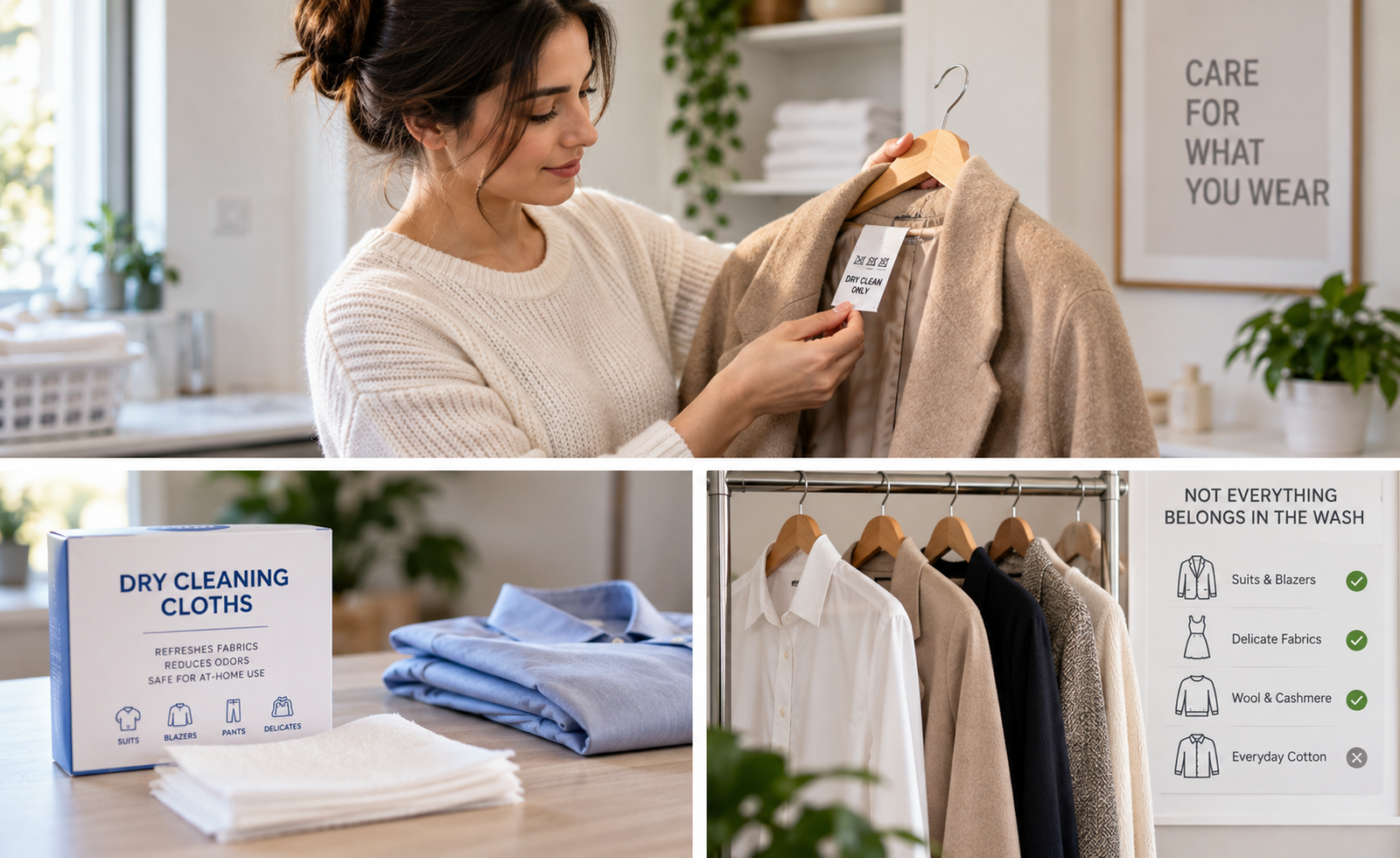
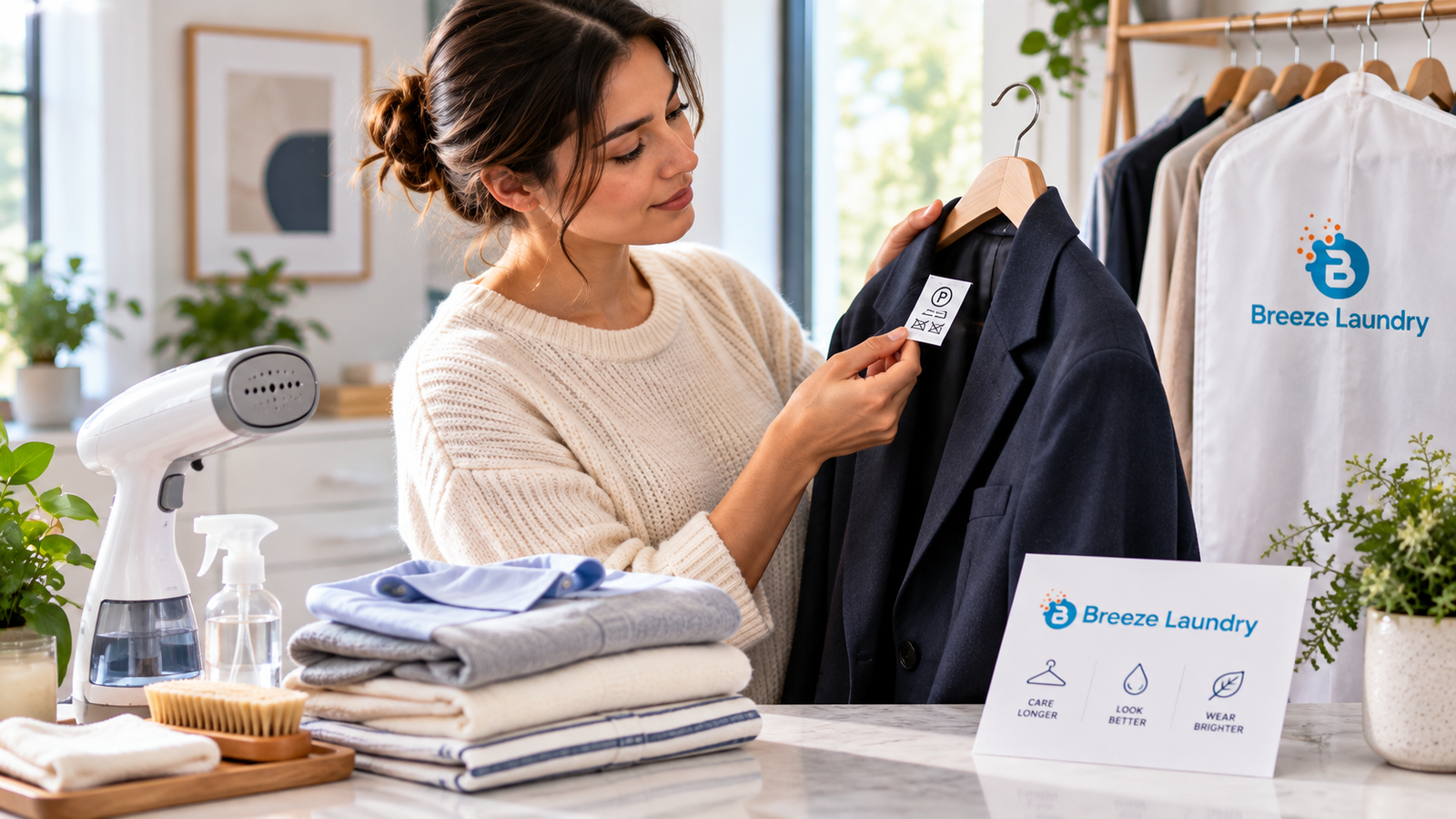
Your first check should always be the garment’s care label. If it says Dry Clean Only, do not treat an online DIY method as permission to wash the item.
For the label rule in more detail, read Breeze Laundry’s Dry Clean Only guide.
What Does At-Home ‘Dry Cleaning’ Actually Mean?
Professional dry cleaning and home garment refreshing are different processes.
| METHOD | WHAT IT ACTUALLY DOES |
| Professional dry cleaning | Uses specialized dry-cleaning equipment and solvent-based cleaning according to the garment’s care requirements. |
| Home refreshing | Uses methods such as airing, brushing, controlled steaming or a consumer garment-care product to reduce light odor, wrinkles or surface soil. |
| Home washing | Uses water and detergent. It should only be used when the care instructions support washing. |
Current 2026 guidance from LG makes the same useful distinction: at-home care is mainly about refreshing clothing, while professional dry cleaning uses liquid solvent to clean garments.
Step 1: Read the Care Label Before You Do Anything
This is the most important step because the finished garment may contain more than the fabric you can see.
Linings, trim, dyes, interfacing and embellishments can all affect the safe care method. The FTC requires manufacturers covered by its Care Labeling Rule to have a reasonable basis for the instructions and warnings they provide.
See the FTC Care Labeling Rule guidance for the governing U.S. guidance.
Step 2: Decide Whether the Garment Needs Cleaning or Just Refreshing
A lightly worn jacket with no visible stain has a different problem from a blouse with an oil mark.
If the item mainly needs airing out or wrinkle reduction, gentle maintenance may be enough for now. Deep stains, strong soil or a care-label restriction are signs that home refreshing may not solve the actual problem.
Step 3: Air the Garment Out
For clothing that is simply stale after a short wear, start with the least aggressive method.
Hang the garment in a clean, well-ventilated area and allow odors and trapped moisture to dissipate. Keep the item away from anything that could transfer dirt or strong fragrance.
This is maintenance, not cleaning, but it can reduce the need to process a garment when it is not actually dirty.
Step 4: Brush Away Surface Dust or Lint
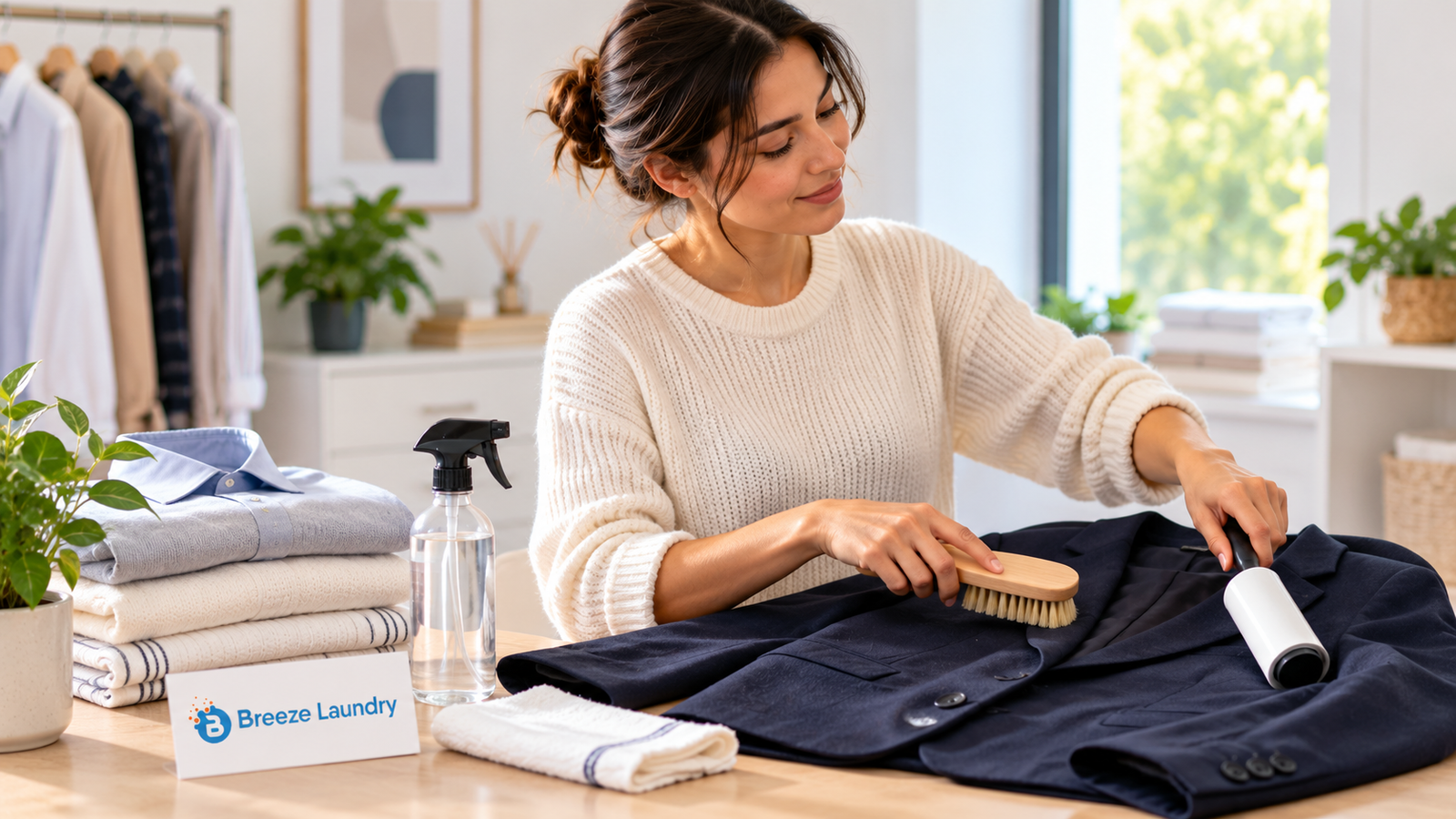
A clean garment brush or appropriate lint tool can remove loose surface debris before it becomes embedded.
Use light strokes and stop if the fabric surface begins to pull, fuzz or change. Textured, embellished or very delicate materials need more caution than a sturdy outerwear fabric.
Step 5: Use Steam Only When the Care Instructions Allow It
Steam can help release light wrinkles and freshen some garments, but it is not safe for every item.
FTC guidance specifically recognizes that some dry-cleaning labels require modifications such as “No steam.” That is why the full care label matters before you reach for a steamer.
If steaming is allowed, keep the treatment controlled and avoid saturating the garment. The goal is wrinkle release, not soaking the fabric.
Step 6: Be Careful With Spot Treatment
A small stain can be tempting to attack immediately, but stain removal is where home care can become risky.
Different stains, dyes and fabrics respond differently to water and cleaning products. Do not aggressively rub a delicate garment, and avoid applying an unfamiliar cleaner directly to a visible area.
If you use a product that the care instructions allow, follow its directions and test cautiously in an inconspicuous area first. For a valuable garment or an uncertain stain, professional assessment is the safer choice.
What About Home Dry-Cleaning Kits?
Home dry-cleaning kits can be useful for light refreshing when both the garment label and the kit instructions support their use.
However, they should not be confused with professional solvent dry cleaning. They are better suited to between-cleaning maintenance than to heavy soil, difficult stains or garments with restrictive care instructions.
The product directions matter just as much as the garment label. If the kit requires heat, tumbling or another treatment the garment warns against, do not use it.
| When home care stops being enough If the garment is stained, structured, valuable, Dry Clean Only or has care instructions you are unsure about, professional cleaning removes the guesswork. |
Which Clothes Should You Not Experiment With at Home?
There is no perfect fabric-only blacklist because care depends on the finished garment. Still, some situations deserve extra caution.
- garments labeled Dry Clean Only;
- structured suits, blazers or jackets with internal shaping;
- clothing with unstable dyes or unknown colorfastness;
- items with beads, trim, delicate embellishments or bonded details;
- leather, suede or fur unless the manufacturer provides a suitable home-care method;
- valuable or sentimental garments where a failed experiment would be costly;
- items with deep oil-based, set-in or unfamiliar stains.
If your main question is whether washing is safe, use the garment label rather than a fabric stereotype.
You can also review Breeze Laundry’s dry cleaning vs washing guide for the broader decision framework.
How to Know When Professional Dry Cleaning Is the Better Choice
Stop the home-care process when you no longer know whether the next step is safe.
Professional care is the better route when:
- the care label specifically says Dry Clean Only;
- the garment has a stain that simple maintenance will not remove;
- steam, heat, water or agitation may affect the garment;
- the item is structured, lined or heavily embellished;
- the garment has already reacted badly to a home treatment;
- you would rather protect the item than test an uncertain method.
Dry Cleaning Pickup in Richmond and Houston
Breeze Laundry provides professional dry cleaning for customers in Richmond and Houston, with pickup and delivery available in eligible service areas.
Use the Pickup & Delivery availability checker to confirm the options available for your exact address.
That gives you a practical alternative when a garment needs professional care but a separate trip to the cleaner is the part you are trying to avoid.
The Safest At-Home Dry-Cleaning Rule
At-home garment care is most useful when the goal is maintenance: airing, light wrinkle release and gentle surface care.
Once the garment needs actual stain removal, has restrictive care instructions or requires a process you cannot confidently replicate, stop. Professional dry cleaning is designed for that next level of garment care.
If you are learning how to dry clean clothes at home, the best skill is not finding a hack for every item. It is knowing which tasks are safe to handle yourself and which garments are better left to a professional.
Frequently Asked Questions
Can you really dry clean clothes at home?
You can refresh and maintain some garments at home, but that is not the same as professional solvent dry cleaning. The care label should determine which home methods are appropriate.
Can I wash clothes that say Dry Clean Only?
If you want to follow the care label, no. FTC guidance states that a Dry Clean Only warning requires evidence that washing will harm the garment.
Can steaming replace dry cleaning?
No. Steam can reduce wrinkles and freshen some garments when the care instructions allow it, but it does not replace professional cleaning or stain treatment.
Do home dry-cleaning kits work?
They can help refresh suitable garments between professional cleanings, but they are not the same as professional dry cleaning. Always check both the garment label and the product instructions.
What clothes should go straight to a professional cleaner?
Dry Clean Only garments, structured clothing, heavily embellished items, valuable pieces and garments with difficult stains are strong candidates for professional care.
Does Breeze Laundry offer dry-cleaning pickup and delivery?
Yes, Breeze Laundry currently offers dry-cleaning pickup and delivery in eligible service areas. Enter your address in the live pickup and delivery checker to confirm availability.
